

Why Bespoke Joinery Costs More Than It Did — And Why It's Still Worth It
Hardwood and Timber Prices
Solid hardwoods — oak, ash, walnut, maple — have all increased in price, some significantly. Demand for timber surged post-pandemic as construction and home improvement projects boomed globally, and supply chains struggled to keep up. Prices that were stable for years moved sharply upward, and while some have settled slightly, they haven't returned to where they were.
Birch Plywood and the Russian War
Birch plywood is a core material in cabinet making — it's strong, stable, and takes a finish well. The UK and Europe relied heavily on Russian and Belarusian birch ply, which was competitively priced and widely available. Since the invasion of Ukraine in 2022, imports from Russia have been sanctioned and effectively stopped. The market shifted almost overnight to Baltic and Scandinavian alternatives, which are higher quality but considerably more expensive. A sheet that cost around £50 now typically costs £120 – £140 depending on grade and supplier.
Blum Hardware — Brexit and Import Costs
We use Blum hardware throughout our kitchens and fitted furniture — their hinges, drawer runners and lift systems are the best available and come with a lifetime guarantee. Blum is an Austrian company, and since Brexit, importing their products into the UK now comes with additional duties, admin costs and longer lead times. These costs get passed down the supply chain. A kitchen that would previously have used £300 of Blum hardware might now see that figure closer to £400–£450 for the same specification.
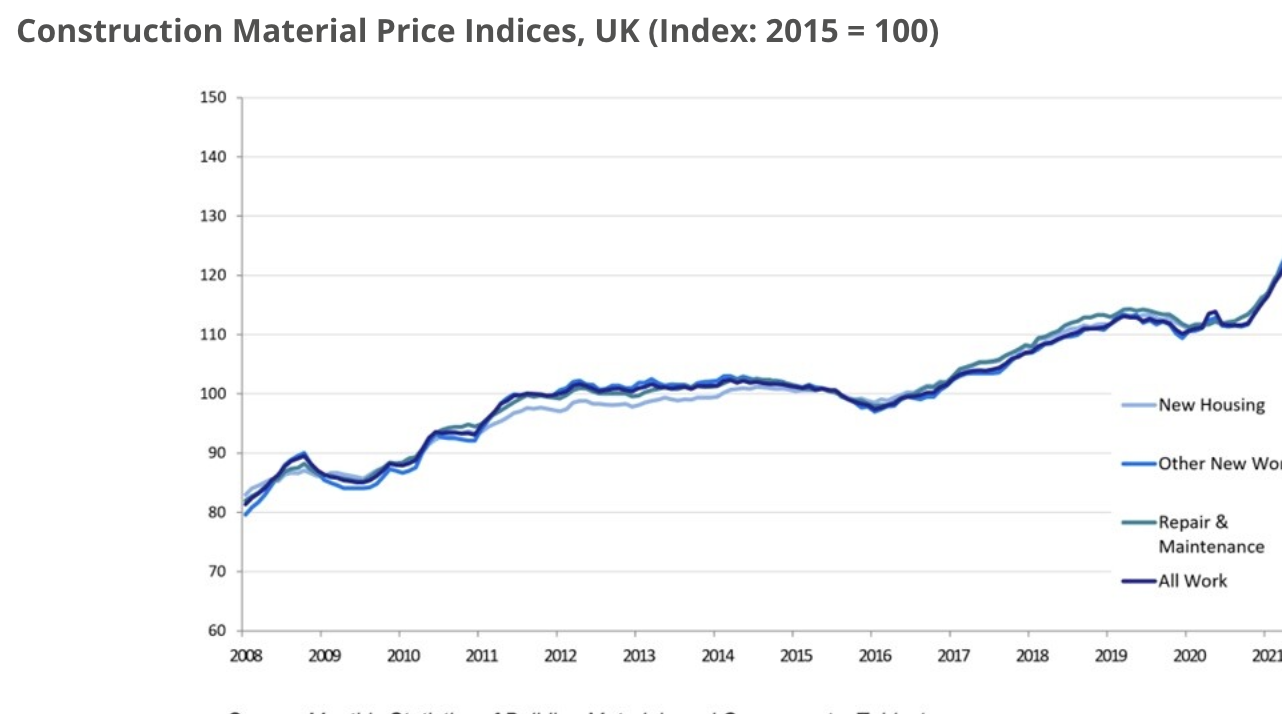
Material price chart since 2008
Paints, Lacquers and Finishing Products
The finishing products we use — paints, lacquers, stains, primers — are largely petroleum-based products. Fuel price rises feed directly into the cost of manufacturing and transporting them. We've seen consistent year-on-year increases in finishing materials, which adds up across a full kitchen or fitted wardrobe project.
Delivery and Transport Costs
Every material we use has to be delivered to our workshop in Frome, and every finished piece has to be transported to site. Fuel costs affect every step of that chain. Haulage companies have increased their rates, and suppliers have added fuel surcharges that simply didn't exist a few years ago. For larger projects this is a meaningful number.
Cost vs Value
The Cost vs Value Argument
There's a reason we don't compete on price with flat-pack or budget kitchen companies — we're not making the same thing. When you invest in bespoke joinery, you're paying for materials that are genuinely better, skills that take years to develop, and a finished piece that will still be standing in 30 years. A well-made oak kitchen adds real value to your home. It photographs well, it sells well, and it never ends up in a skip after ten years because the carcasses have swollen or the doors have warped. Good joinery is also better for the environment — buy once, buy well, and you're not contributing to the cycle of cheap furniture that gets replaced every few years and ends up in landfill. In a world where everything feels disposable, we still make things that last.